.svg)
.svg)

A 24% tax for wholesale cannabis went into effect in Michigan on January 1. Retailers quickly adjusted to the mechanics of the new tax. The bigger challenge has been understanding how it changes day to day inventory planning and cash flow management.
Over the last several weeks, we have talked with several Michigan operators navigating this in real time. The retailers who are holding up best are sharing resources and doing math to outsmart the tax. They are tightening inventory discipline and making more deliberate routing decisions based on cash preservation.
The common thread is simple: inventory mistakes cost more now, and efficiency in ordering and allocating is worth even more than it used to be.
Stockpiling ahead of January rarely worked as planned
Many retailers increased orders late last year to get ahead of the tax. The logic was familiar. Buy early, protect margin, avoid higher costs later.
What actually happened looked different.
Fast-moving products were not available in unlimited supply. Slow-moving products were easily accessible. Inventory decisions skewed toward what could be purchased rather than what would reliably sell. Once January arrived, replenishment orders for best sellers carried the new tax.
Retailers who needed to rotate inventory found that every swap required more cash than before. Inventory rotation, which is a normal and healthy retail behavior, suddenly became more expensive.
Holding inventory just got riskier
Cannabis inventory loses value over time. Flower dries out. Pre-rolls burn into canoes. Gummies get hard. Customer experience declines quietly but consistently.
Discounting becomes unavoidable when inventory lingers. Discounts reduce margin and weaken pricing power. The new tax compounds this effect by increasing the upfront cost of every unit that sits too long.
Cash tied up in slow-moving inventory limits flexibility. Flexibility matters more now because the cost of correcting mistakes has gone up.
Thin ordering matters more than ever
Retailers who were already ordering lean are adjusting faster. Retailers who relied on bulk buys are feeling squeezed.
Shorter days on hand reduce exposure. More frequent reordering reduces the need to predict demand months in advance. Matching orders to sell-through protects both margin and liquidity.
Fear of stockouts pushes retailers to overbuy. Lead times are usually shorter than they feel. Ordering more often is allowed. Full shelves do not require excess inventory.
Distribution strategy now affects tax outcomes and cash flow
One of the more subtle shifts we are seeing involves how inventory is routed.
Many Michigan retailers operate with a central distribution or processing center that allocates inventory to multiple stores. Under the new tax structure, the tax basis can change depending on whether products are sent directly to a retail location or routed through a processing or distribution facility.
For affiliated or vertically integrated operators, products routed through processing are taxed based on the state’s average wholesale price list, which is updated quarterly. Products sent directly to a retail store are taxed based on the actual wholesale price paid to the vendor, without adjustments for rebates or discounts.
Retailers are responding by doing the math order by order.
When products are purchased below the average wholesale price, sending them directly to a store can result in a lower tax obligation. When products are purchased at or above the average wholesale price, routing through processing can reduce the tax impact.
The best operators are not trying to optimize this perfectly. They are sharing resources to calculate a rough threshold and making routing decisions that preserve cash. Order minimums, delivery fees, storage capacity, and operational complexity still matter.
The goal is avoiding unnecessary cash drain rather than tax perfection.
Once inventory lands at a retail store, transfers between retail locations do not trigger additional tax. Some retailers are leaning on this flexibility, using stores as temporary hubs when distribution capacity is constrained.
One of the takeaways here is that the retail community is helping each other by sharing resources and best practices, and it’s happening right now. If you’re trying to sort out how to manage this new environment, consider reaching out to other retailers to see if they can share resources with you.
Product category adds another layer of complexity
Edibles, topicals, and other ingestibles introduce additional calculation steps. Taxes for these categories are tied to net weight, which can vary by batch.
Retailers are now requesting net weight details from vendors and factoring that into their tax estimates. This adds friction to purchasing decisions and further rewards operators who keep inventory tight and turnover fast.
If you overbought, movement still matters
Some retailers entered the year holding more inventory than they wanted. Sitting on it makes the situation worse.
The first step is visibility. Understand what is owed, when it is owed, and which products will age poorly. Shelf-stable items with predictable demand behave differently than strain-specific flower.
Slow movers should move. Bundling and targeted discounts free up cash. Preserving that cash is critical. Paying vendors strategically rather than reactively protects long-term relationships and operational stability.
Waiting until net terms are overdue removes options. Early conversations preserve them. Having 90-180 days of inventory on hand when net 30-60 day terms come due is a cashflow disaster.
The next phase favors disciplined operators
This tax environment works best for retailers who run tight operations. Lean inventory, fast turns, and deliberate routing decisions create room to maneuver.
Retailers who keep buying for comfort will feel increasing pressure. Retailers who treat flexibility as an asset will adapt faster.
We are already seeing peer collaboration accelerate. Shared calculators, scenario planning, and real-world learnings are spreading quickly. That collective learning curve matters.
Inventory math changed on January 1. The retailers who adjust how they buy, route, and hold inventory will protect cash flow and margin. The ones who do not will spend the year reacting.
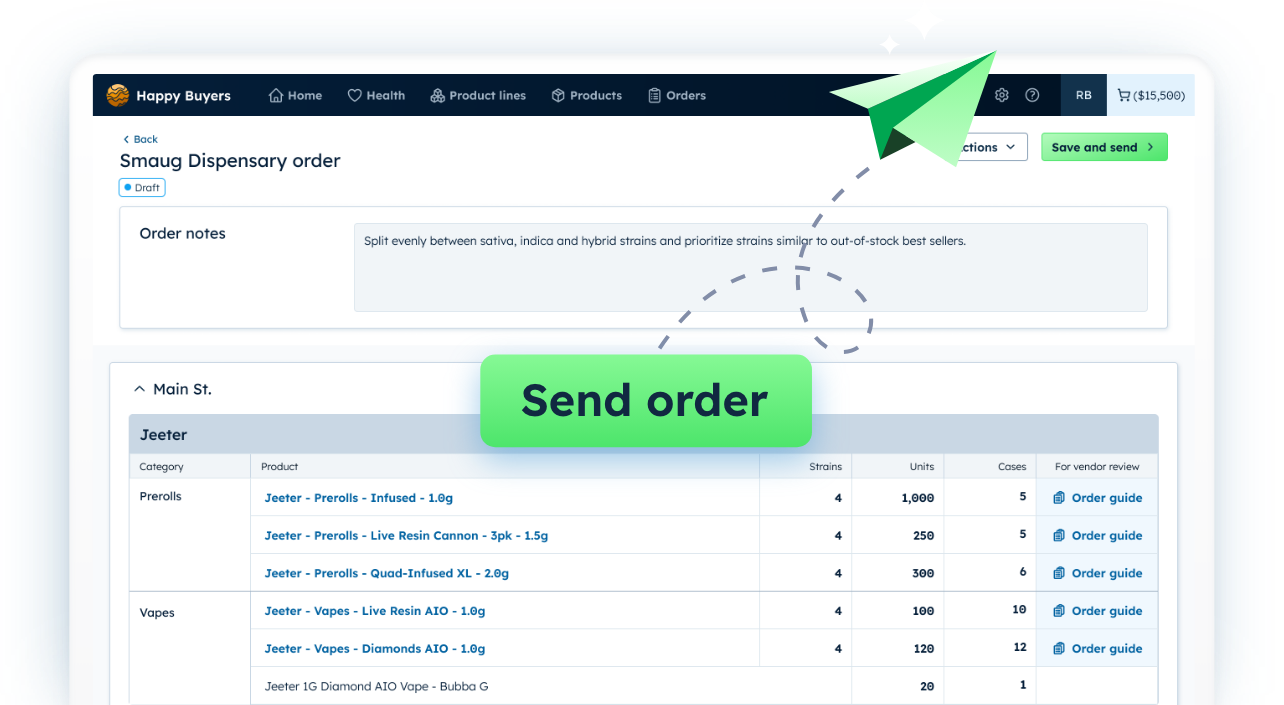
Do you want to get quicker and smarter with your ordering decisions? There’s only one way to move faster than a spreadsheet: Happy Buyers.
Try it free for 14 days. We’ll work with you to help set up workflows for managing your inventory exactly like we explain in this article without charging you a dime.


.png)
.png)
.png)