.svg)
.svg)

Most of the forces working against your margins in cannabis are enormous and slow moving. Inventory is not one of them.
Cannabis operators are dealing with a lot of things they did not sign up for. Tax structures that penalize profitability. Persistent price compression. Regulatory overhead that consumes margin before a single unit sells. These pressures are real, they compound over time, and most of them are genuinely outside your control.
When there is something you can control, something with a fast and visible payoff, it deserves serious attention.
Inventory is that thing.
Why Inventory Is Different
Fast ROI is elusive in cannabis retail. Most investments pay off slowly, if at all. Marketing builds over time. New hires take months to fully contribute. Technology implementations rarely deliver on the timeline the sales deck promised. The wins, when they come, tend to feel far away.
Purchasing moves differently. When you clean up your ordering, reduce days on hand, and stop tying up cash in product that moves too slowly, the results show up quickly.
Cash flow improves. Buyers recover time they were spending on reactive reorders. The stress that builds every time a vendor invoice comes due starts to ease. This is one of the few places in cannabis retail where the work and the payoff are close enough together that your team can actually feel the connection.
The Real Challenge Is Change
Most operators who struggle to achieve a leaner inventory are not struggling because the problem is complicated. They are struggling because changing how people work is hard, even when the case for change is clear.
Buyers carry years of vendor relationships, product intuitions, and ordering habits that were built before the current software, before the current analytics tools, sometimes before the current team.
Asking people to reorder on tighter cycles based on data instead of instinct is not just a workflow adjustment. It asks them to relate to their own expertise differently.
The teams that make this transition successfully tend to frame lean inventory as expanded capability rather than added constraint. They’re experiencing the gains in time and money and know exactly why the change was worth it.
A buyer who knows exactly which products are turning well, which are aging, and where cash is sitting idle is a better negotiator. They walk into vendor conversations with specifics. They can make faster decisions with more confidence.
An Example of What Lean Inventory Looks Like
After working with 500+ retailers, here's the most common scenario we see.
Before
A brand rep wants to move product. The buyer pulls their POS data, does some quick math on a spreadsheet, and places an order. The rep throws in a bulk discount to bump the case count. The buyer takes it, because the per unit savings feels like a win.
It isn't.
The spreadsheet couldn't account for the holiday spikes buried in that sales window. The run rate was inflated. Now there's way more inventory on the shelf than the store can actually sell, and it's starting to age. Aging inventory means markdowns, wasted shelf space, and shrinking margins.
After
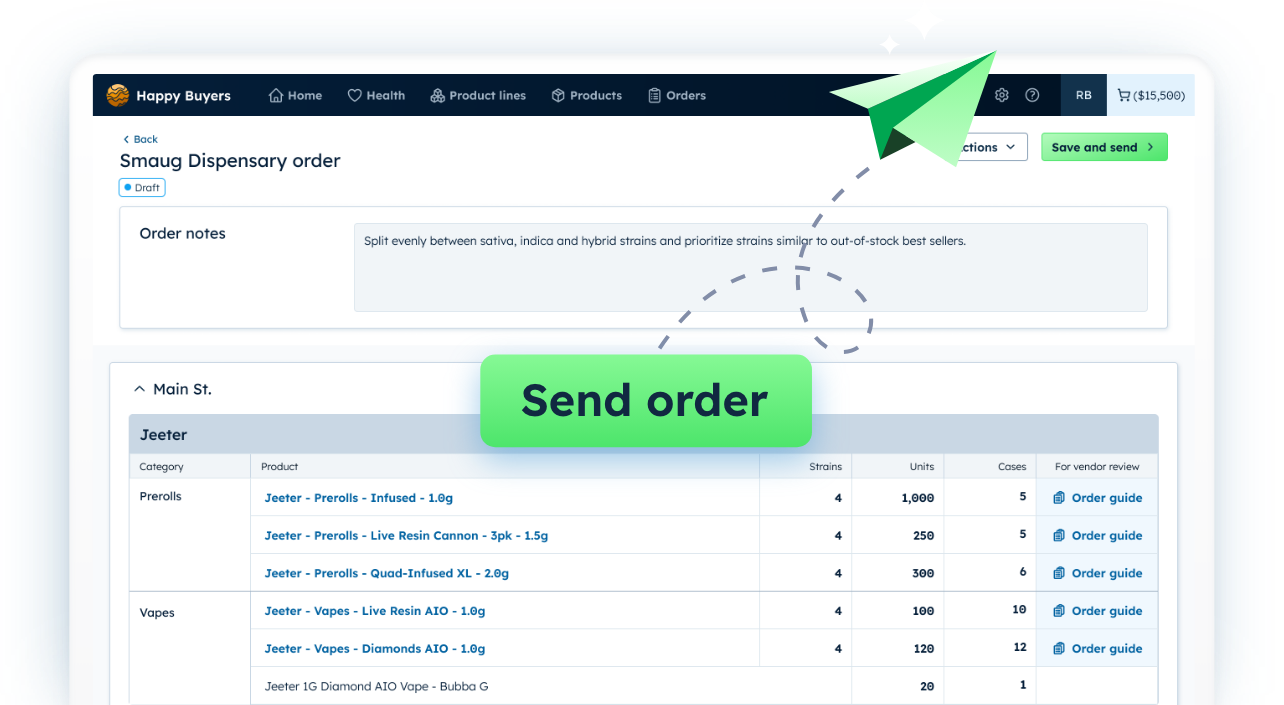
With Happy Buyers, the buyer walks into that same conversation with clean data. Accurate run rates. Blockout dates that filter out anomalous sales events. A reorder window tight enough to keep cash moving.
When the rep pitches the bulk discount, the buyer already knows it isn't worth it. They share their Brand Report, order exactly what they need, and walk away with thousands of dollars still in play.
That's one order, one brand. Multiply it across an entire menu, every few weeks, and the difference compounds fast.
A Solvable Problem
Most of the difficult challenges in cannabis retail require patience, capital, or regulatory outcomes that are genuinely uncertain. Getting inventory right requires none of those things. It requires clear visibility into what you have, how fast it is moving, where it fits in your menu mix, and a willingness to act on that information consistently.
The macro environment is not going to cooperate on your timeline. Your inventory can. And the operators who treat that as the opportunity it is tend to find that profitability starts to feel a lot less fragile.


.png)
.png)
.png)